
This content is for general informational purposes only and discusses common topics related to vision and eye health. It is not intended to diagnose, treat, or prevent any condition. Information presented may vary between individuals and should not replace professional guidance.
When Straight Lines Start Looking Bent… It May Be an Early Sign of Macular Degeneration
It often begins with subtle distortion — faces less clear, details fading, and vision not feeling the same anymore.
And for many people… this is how vision loss begins — slowly getting worse over time.
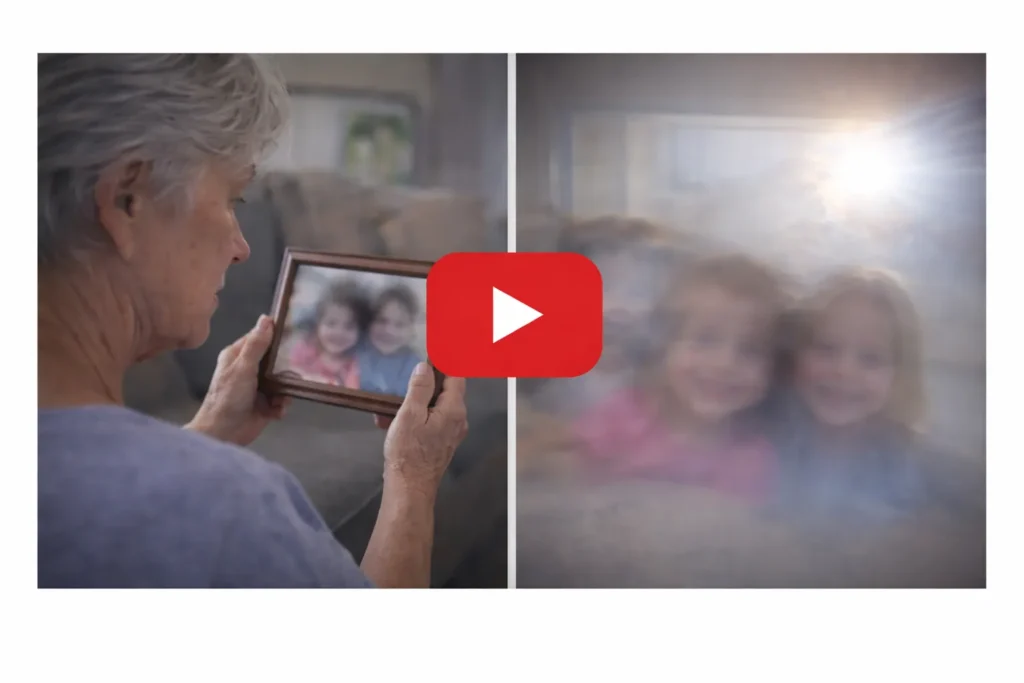
Have You Noticed These Subtle Changes?
At first, it’s easy to ignorejust small differences when reading, focusing, or looking at things you see every day.
- Straight lines don’t look as sharp anymore
- Words take longer to come into focus
- Night driving feels more uncomfortable
- Faces or details seem slightly blurred
- Objects look a bit blurred — even when you try to focus
- Colors don’t look as vivid as before
They slowly become more noticeablemore uncomfortableand harder to ignore.
And by the time most people realize what’s happeningtheir vision is already starting to change in ways they didn’t expect.
This Is How Vision Loss Quietly Takes Over

It doesn’t happen all at once.
It starts quietly…
with small changes that are easy to ignore.
A little blur. A slight distortion.
A moment where things don’t look as clear.
But over time…
those small changes don’t stay small.
They get worse.
Harder to ignore.
Harder to fix.
And in many cases…
impossible to fully reverse.
And by the time most people realize what’s happening… their vision has already started slipping away.
The Silent Vision Changes Many People Ignore
These are not harmless changes — they may be early signs of macular damage affecting your central vision.
- Straight lines begin to look bent
- Faces seem slightly blurred
- Reading becomes harder than before
- Blur spreads in central vision
- Details slowly fade over time
- Colors may look less vivid
- Many ignore it in early stages
- Vision distortion becomes more noticeable
- Loss of clarity can become permanent
- "It’s just aging"
- "I need new glasses"
- "It’s nothing serious"
- Early macular degeneration signs
- Damage affecting central vision
- Distortion that worsens over time
What If It’s Not Just Aging… At All?
Most people are told their vision is fading because of age.
But what if that’s not the real reason?
What if something is slowly damaging your eyes… every single day?
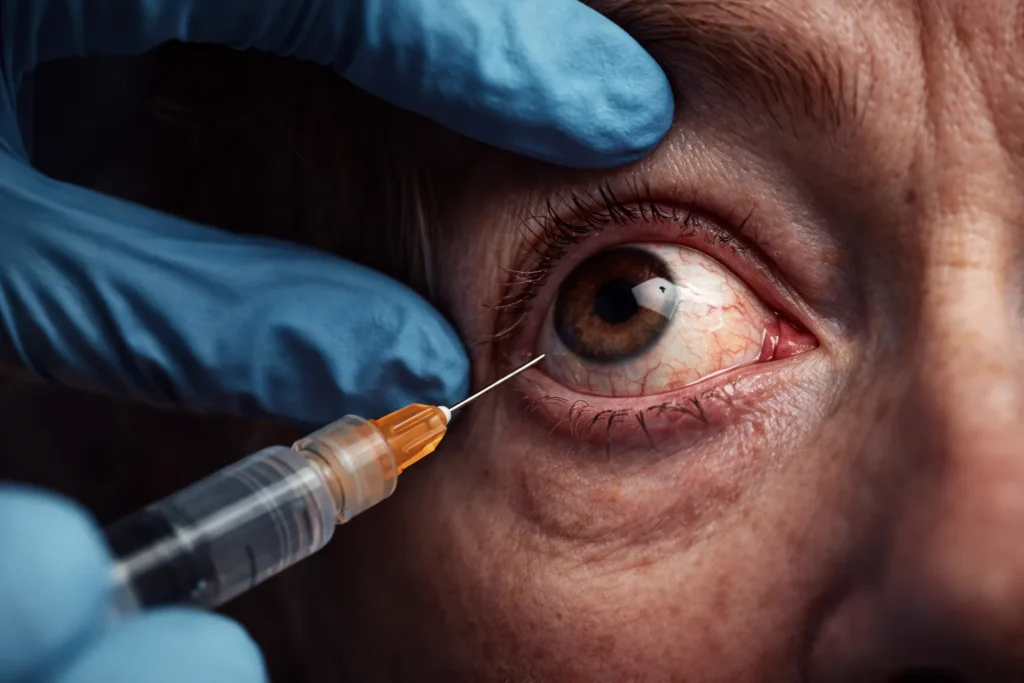
For Many People… This Is Where It Leads
At first, it’s ignored.
Then it’s monitored.
And then… it becomes something much more serious.
The blur doesn’t go away anymore. The distortion becomes constant.
Reading gets harder. Recognizing faces takes effort.
And everyday tasks don’t feel as simple as before.
Some Are Told This Is The Only Option
Repeated injections directly into the eye.
Procedures that don’t restore vision —
only slow down the damage.
And the uncertainty of how long it will last.
But The Fear Goes Beyond That
Not being able to read clearly.
Not recognizing someone you love.
Losing confidence to drive.
And slowly losing your independence…
without knowing if it can be stopped.
This Is What Scares People The Most
It doesn’t happen suddenly.
It happens slowly…
until one day, something important disappears from your vision.
But What If This Process Could Be Stopped Earlier?
What if the real cause isn’t what most people think… and there’s something happening inside the eye that few understand?
This Is How Many People Realize It’s Too Late
“The idea of a needle in my eye terrified me… but not seeing clearly anymore was even worse.”

Susan Walker, 62 years
Mother & Grandmother
It started small — just a little blur, lights at night, focus taking longer.
I ignored it.
Until one day… I looked at my grandchildren’s faces — and something felt wrong.
They weren’t clear anymore.
That’s when fear hit me.
Weeks later, I heard the diagnosis…
and the word I couldn’t forget: injections.
A needle.
Directly into my eye.
That’s when I realized…
this wasn’t just aging.
What I discovered next changed everything… and it’s explained in the video below.
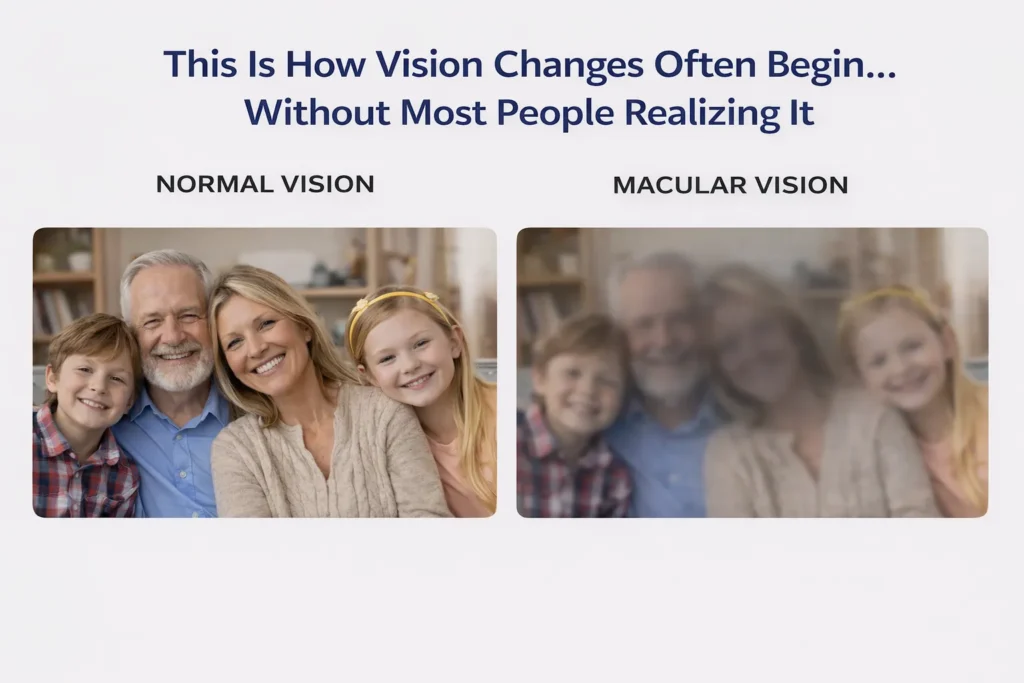
At first, it looks like this… But over time, it may become harder to ignore.
Most people think vision loss happens suddenly.
It doesn’t.
It starts quietly…
with small changes that are easy to ignore.
But once they begin —
they rarely stay the same.
If you’ve noticed any of these… your eyes may already be changing.
Straight lines don’t look right anymore
What used to look normal…
now feels slightly off, bent, or distorted.
Words are harder to focus on
Text may look faded, blurred…
even when using your usual glasses.
Faces or details losing clarity
Especially in low light…
or when trying to clearly see someone’s face.
What Researchers Found Inside The Eye Shocked Them
When they looked beyond surface symptoms…
they didn’t find just “aging.”
They found something deeper.
Something that may be quietly affecting how your eyes focus, process light, and see detail.
Over time, this may interfere with the eye’s natural ability to maintain clear vision.
And most people don’t even realize it’s happening.
That’s why many people feel their vision slowly getting worse… even when they try to fix it.
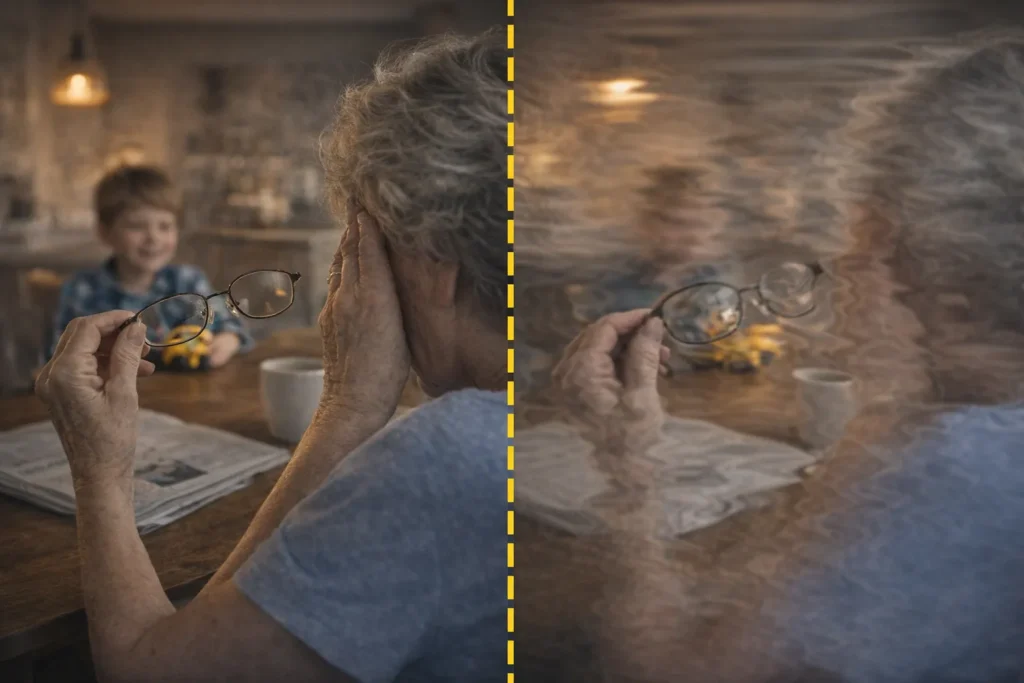
Before these changes become harder to ignore
So What Did They Do Differently?
Instead of focusing on temporary fixes…
they explored a different approach —
one that supports how the eyes naturally protect and repair themselves over time.
What they discovered is surprisingly simple… but most people have never heard about it.
© 2026 . All Rights Reserved.
Contact
If you have any questions about the information presented on this website, you may contact us through our support channel.
We aim to respond to all legitimate inquiries within a reasonable timeframe.
Support
Email: support@yourdomain.com
Please replace the email above with your real support email before publishing.
Reference
The content on this website is provided for general educational and informational purposes only.
Any opinions expressed are based on publicly available information, general research, and editorial interpretation. This website may reference third-party materials, educational sources, or product-related information when discussing health and wellness topics.
We encourage visitors to do their own research and consult qualified professionals whenever making personal health decisions.
Terms Of Use
By accessing this website, you agree to use it for lawful purposes only and in a way that does not infringe the rights of, restrict, or inhibit anyone else’s use of the site.
The information on this website is offered for general informational and educational purposes only and may be updated, modified, or removed at any time without notice.
We make reasonable efforts to keep the content accurate and current, but we do not guarantee completeness, reliability, or suitability for any particular purpose.
Your use of any information or materials on this website is entirely at your own risk.
Disclaimer
This website does not provide medical advice, diagnosis, or treatment. The content is intended for informational and educational purposes only and should not be interpreted as professional medical guidance.
Statements on this website have not necessarily been evaluated by any regulatory authority unless explicitly stated otherwise. Individual results may vary.
Visitors should always consult a qualified healthcare professional before starting any diet, supplement, exercise program, or wellness routine, especially if they have an existing medical condition or are taking medication.
No information on this site is intended to replace a one-on-one relationship with a licensed healthcare provider.
Privacy Policy
Your privacy is important to us. This website may collect limited personal information that you voluntarily provide, such as your email address when contacting support.
We may also collect non-personal data automatically through cookies, analytics tools, or server logs in order to improve website performance, user experience, and security.
We do not sell, rent, or trade your personal information to third parties. Information may be shared only when required by law, to protect our legal rights, or to operate essential website functions through trusted service providers.
By using this website, you consent to the collection and use of information in accordance with this policy.